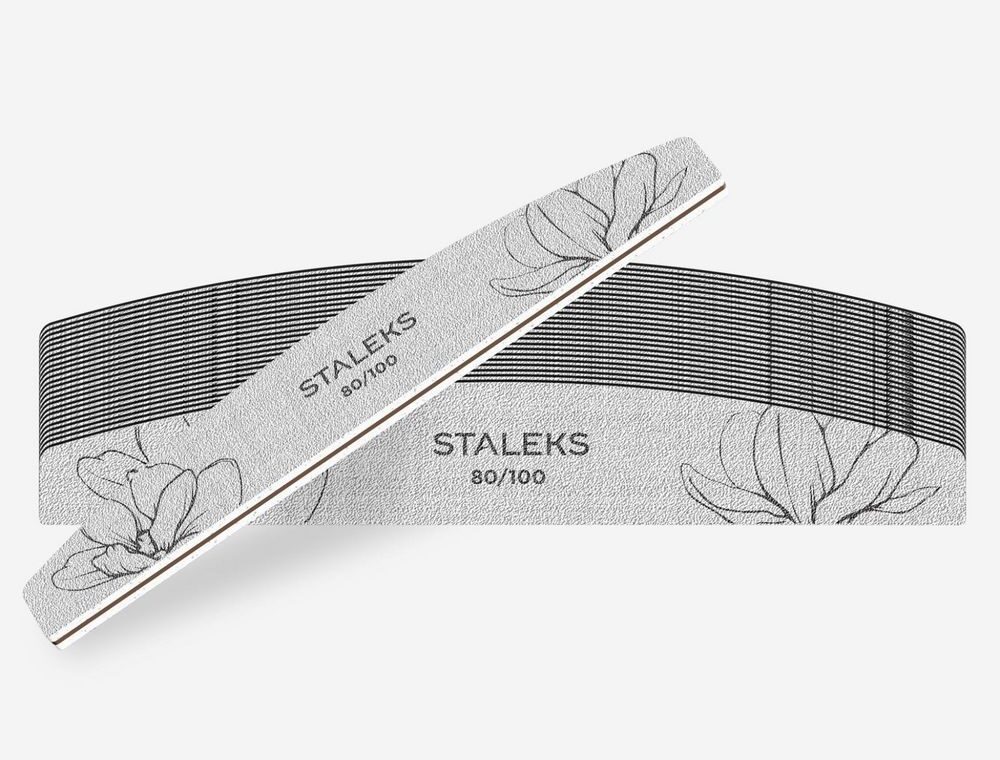
Coarse files do the heavy lifting at the acrylic table, and the shape of the file matters as much as the grit. The NFE-40 crescent mineral file pairs an 80/100 grit with a gently curved body, giving technicians a fast-cutting tool that still follows the natural curve of the nail.
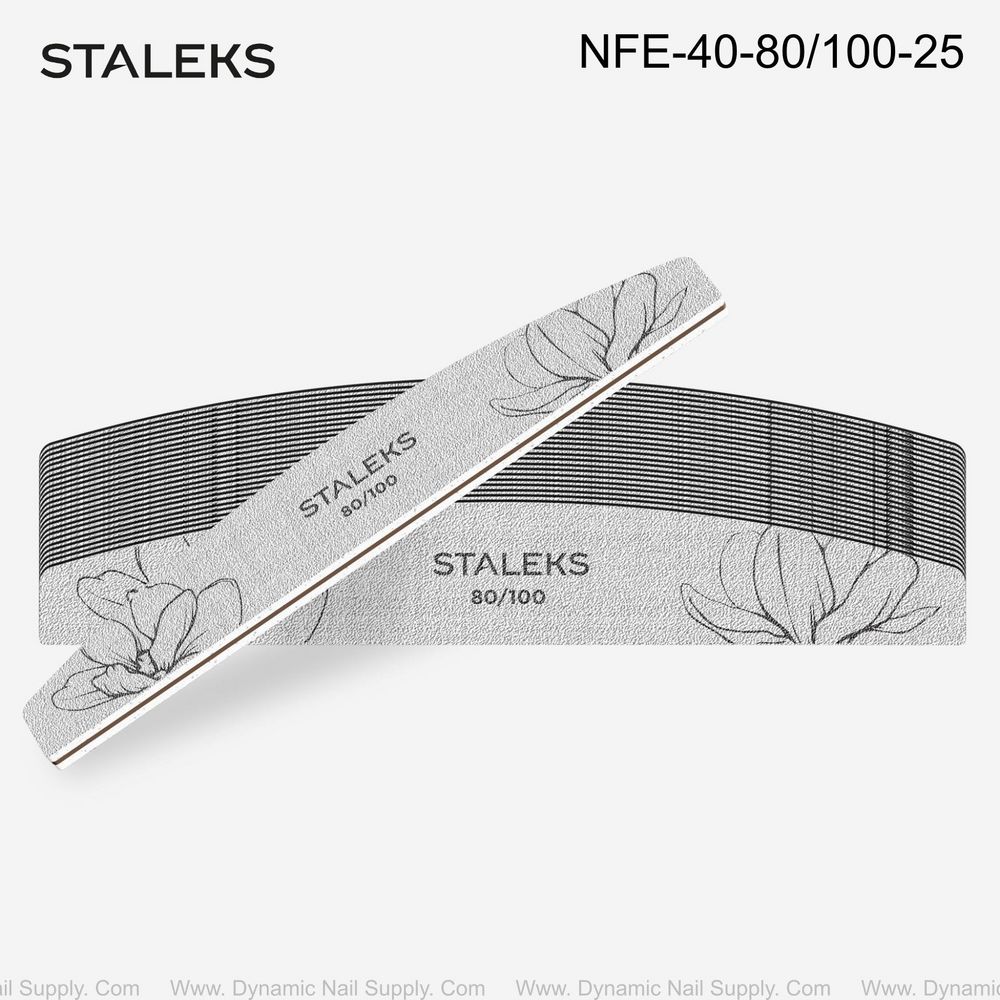
80/100 crescent mineral file in pale gray with black line-art
Why the Crescent Shape Helps
A straight board file touches the nail along one flat line. The crescent curve lets you sweep along the sidewalls and the free edge without flattening the C-curve you just built. It is especially handy when refining the apex area or blending a thick enhancement down toward the cuticle zone.
What 80/100 Grit Is For
- 80 side: bulk removal on acrylic and hard gel, shortening length and taking down thick fills.
- 100 side: shaping the free edge and evening out the surface before moving to a finer buffer.
- Not for natural nails: this coarseness is meant for enhancements only; switch to a 180 or finer file on natural nail plates.
Working Technique
Hold the file at a slight angle and work in long, light strokes instead of short sawing motions. Let the grit do the work; pressing hard creates heat and can lift product. Check the side profile often, and finish with a finer file so clients leave with a smooth surface.
A 25-Pack Keeps the Station Hygienic
Mineral files wear down and are difficult to sanitize thoroughly, so many salons treat them as single-client tools or give each regular client their own. A pack of 25 makes it easy to open a fresh file for every service and keep a few spares at each station. If your team goes through coarse files quickly, the NFE-40 80/100 crescent mineral file pack is a practical way to keep supply steady.
Quick Care Notes
Brush dust off between clients, store files dry, and retire any file that feels smooth or has frayed edges. Always wear a mask when filing acrylic and keep dust collection running at the table.