Imagine a busy mobile setup on a hardwood table: soft daylight, a pastel-pink tool laid on a towel, and a row of glossy black nails waiting for their cat-eye stripe. A mobile nail tech leans in, brow furrowed—some nails flash vibrant violet, others show faint ghosting or uneven pulls. That exact scene is where problems get solved, fast.
Readers often ask: What causes ghost lines and weak pulls?
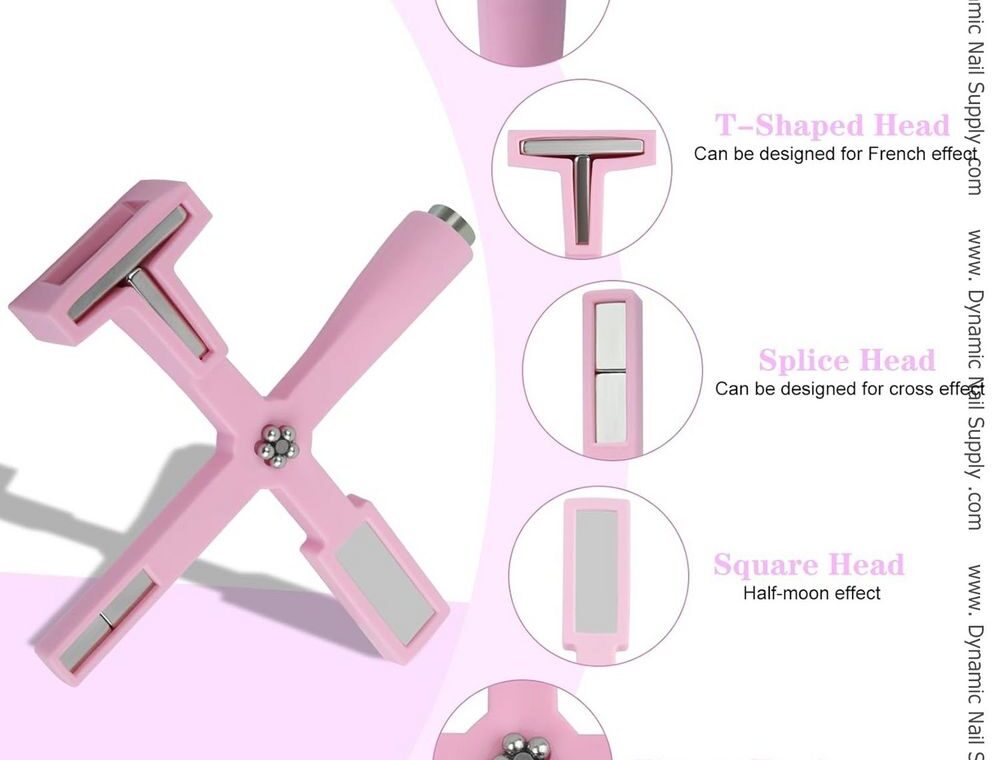
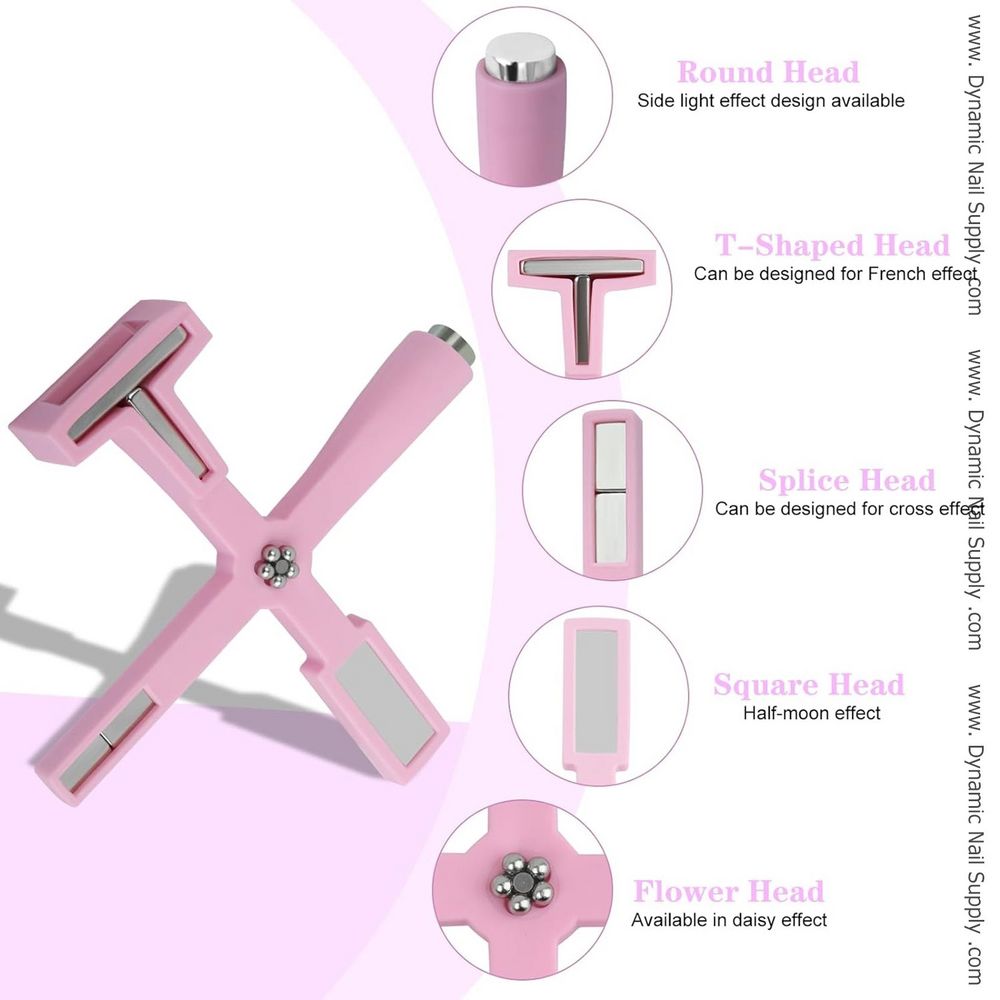
Readers often ask why a perfect magnet pull on one nail becomes a faint ghost on the next. The short answer: small variables stack. The magnet distance, gel viscosity, the strength and orientation of the magnet arms, and even the black base pigmentation each play a role. The Upgraded 5-in-1 Magnet Tool Bar (pink silicone handle) makes some fixes easier because it displays multiple rectangular silver magnet inserts across its arms and gives clear visual points to align over the nail. Troubleshooting starts by isolating one factor at a time so you know whether the polish, the magnet, or the technique needs adjustment.
Readers often ask: How far should the magnet be from the nail?
Readers often ask about the ideal gap. Too far and the magnetic particles barely react; too close and you risk a harsh, pinched stripe or accidental smudging. Start at about 3–5 millimeters from the wet gel surface for most cat-eye formulas. Hold steady for 8–12 seconds depending on the product’s magnet response, then cure. If the pull is weak, gradually decrease the gap by 1 mm steps while testing on a spare tip—observe how the bright violet or magenta shimmer intensifies as the magnet gets closer. If you begin to see multiple competing streaks or dents, back up to the previous comfortable distance.
Readers often ask: Does gel viscosity matter and how do you tell?
Readers often ask whether the cat-eye gel itself causes streaking. Viscosity is critical: thin gels allow magnetic particles to shift too quickly and create blurred or feathery lines; overly thick gels can resist movement and give incomplete pulls. The ideal working viscosity for the dramatic shimmery stripe you see on the demonstration nails in the photo is a medium-flow gel that levels on its own but still holds the magnetic particles long enough to respond. If the drag happens mid-pull, you likely have a gel that’s too tacky or too thick; if the stripe fans out like smoke, the gel is too runny or under-layered.
Readers often ask: What magnet angles and movements help control streaks?
Readers often ask about angles. The Upgraded 5-in-1 Magnet Tool Bar offers multiple arms so you can test perpendicular pulls, gentle diagonal sweeps, or short, precise exposures. For a single strong central stripe (like the magenta pull over black), position a rectangular insert parallel to the nail’s long axis and hold without rocking. For swirls, tilt the tool slightly and rotate the arm in a smooth arc 10–15 degrees while maintaining distance. For an ombre cat-eye blend between violet and magenta, use a short pulse from one arm, then a second short pulse from a neighboring arm at an opposing angle to blend without overworking the gel.
At this point it helps to try the specific product in hand: placing the rectangular magnets over the polish, testing angles and timing, and learning which arm gives the most intense pull. For a direct, product-specific test consider using the magnet tool bar pink handle to reproduce the exact pulls shown in the photo, where the pink silicone handle provides comfortable finger control and the silver inserts give visible alignment cues.
Readers often ask: Why do some nails show streaking across the stripe?
Readers often ask about cross-streaks. These usually come from motion during the pull—either the magnet wobbles or the technician’s hand dips. The pink silicone handle on this magnet bar helps stabilize grip, reducing unwanted lateral movement. Keep your elbow anchored, use a steady breath, and position the magnet so it covers the nail completely if you want a single clean stripe. If a faint secondary line appears, it’s often caused by a second magnetic field interaction: either the magnet is too close at one edge or the gel contains uneven particle concentration. A thin re-coat and a second, but shorter, pull can correct mild cross-streaking without over-saturation.
Readers often ask: How to fix ghosting after curing?
Readers often ask whether you can revive a faded cat-eye after the nail is cured. If the gel is fully cured, the magnetic particles are fixed and further pulls won’t work. To avoid this, work quickly: apply your gel, use the magnet while still wet, and cure immediately once the pull is correct. If ghosting appears because one side of the stripe is weak before curing, do not cure—gently reapply a thin layer of the same cat-eye gel to the affected area and reattempt the pull with a slightly closer magnet distance. If the entire nail cured with a weak pull, you’ll need to remove and reapply that layer to achieve a strong stripe.
Readers often ask: Quick run checklist before each cat-eye pass
- Surface prep: clean, degreased black base for maximum shimmer contrast.
- Gel amount: one medium bead, spread to cover but not flood the cuticle.
- Distance test: start ~3–5 mm; adjust in 1 mm steps.
- Hold time: 8–12 seconds, tweak per formula response.
- Steady grip: use the silicone handle to avoid wobble.
Readers often ask: Care, safety and magnetic notes
Readers often ask whether magnets are safe around electronics or jewelry. Keep magnets away from sensitive electronics and strong magnetic strips; avoid direct contact with pacemakers or medical devices (standard caution for small magnets). Clean the silicone handle with mild soap and a soft cloth; avoid harsh solvents that could damage the grip. The rectangular silver inserts are exposed magnetic faces—do not drop or hit them, as dents can create uneven fields that contribute to streaking.
Pastel pink handle meets bold violet cat-eye pulls.

Glossy black base with vibrant cat-eye shimmer.
Quick specs
- Product: Upgraded 5-in-1 Magnet Tool Bar for Cat eye gel polish (Pink Silicone handle)
- Handle style: pastel pink silicone
- Magnet style: rectangular silver magnet inserts across multiple arms
- Finish shown: high-gloss cat-eye effects in violet, magenta over black
- Price: $8.97 (prices may change)
Who should buy: Mobile techs who need a portable, easy-grip magnet tool to troubleshoot streaking and experiment with angle-driven cat-eye effects. The pink silicone handle makes handling on the go simple, and the multiple rectangular inserts let a technician diagnose and correct distance, angle, and pull-strength problems without swapping tools. This tool fits a mobile kit where quick, repeatable adjustments matter most.